

Africa
As a student at the Sculpture School of the Royal College of Art, it came naturally to me to utilise found materials to create my art works. The sculptures I made were a three-dimensional extension of the scrapbooks I had kept since a child.
In September 1986, my tutor and pop art pioneer Eduardo Paolozzi invited me to an exhibition he had curated at the Museum of Mankind. Entitled Lost Magic Kingdoms, it featured his own work alongside selected items from the enormously diverse ethnographic collections of the museum.
From the depths of the archives Paolozzi had chosen a feast of lively and charmed sculptural improvisations from around the globe: necklaces woven from milk bottle tops (Ghana), skeletons fashioned from TV aerials (Mexico), and fabrics embroidered with telephone wires and safety pins (Zambia).
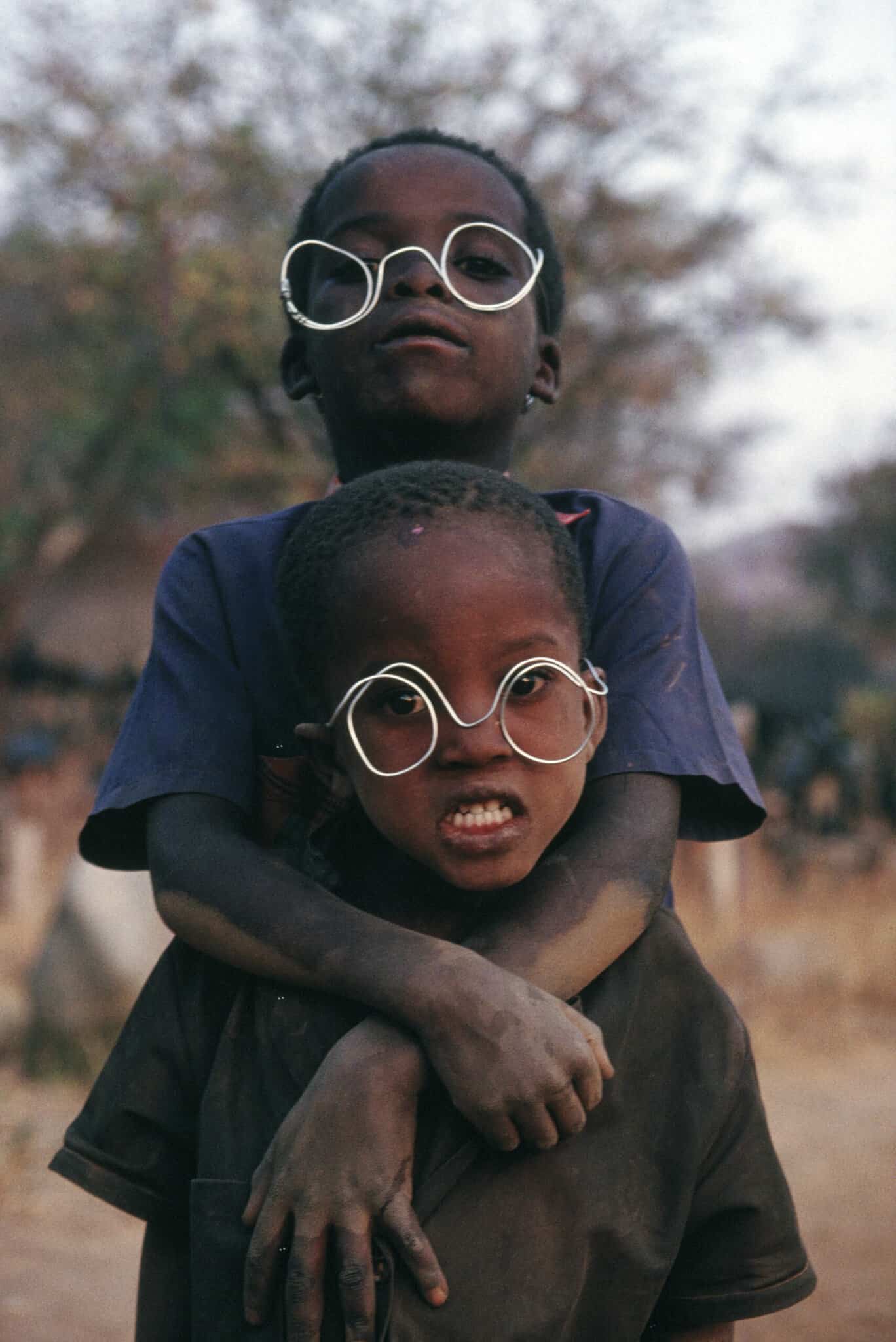
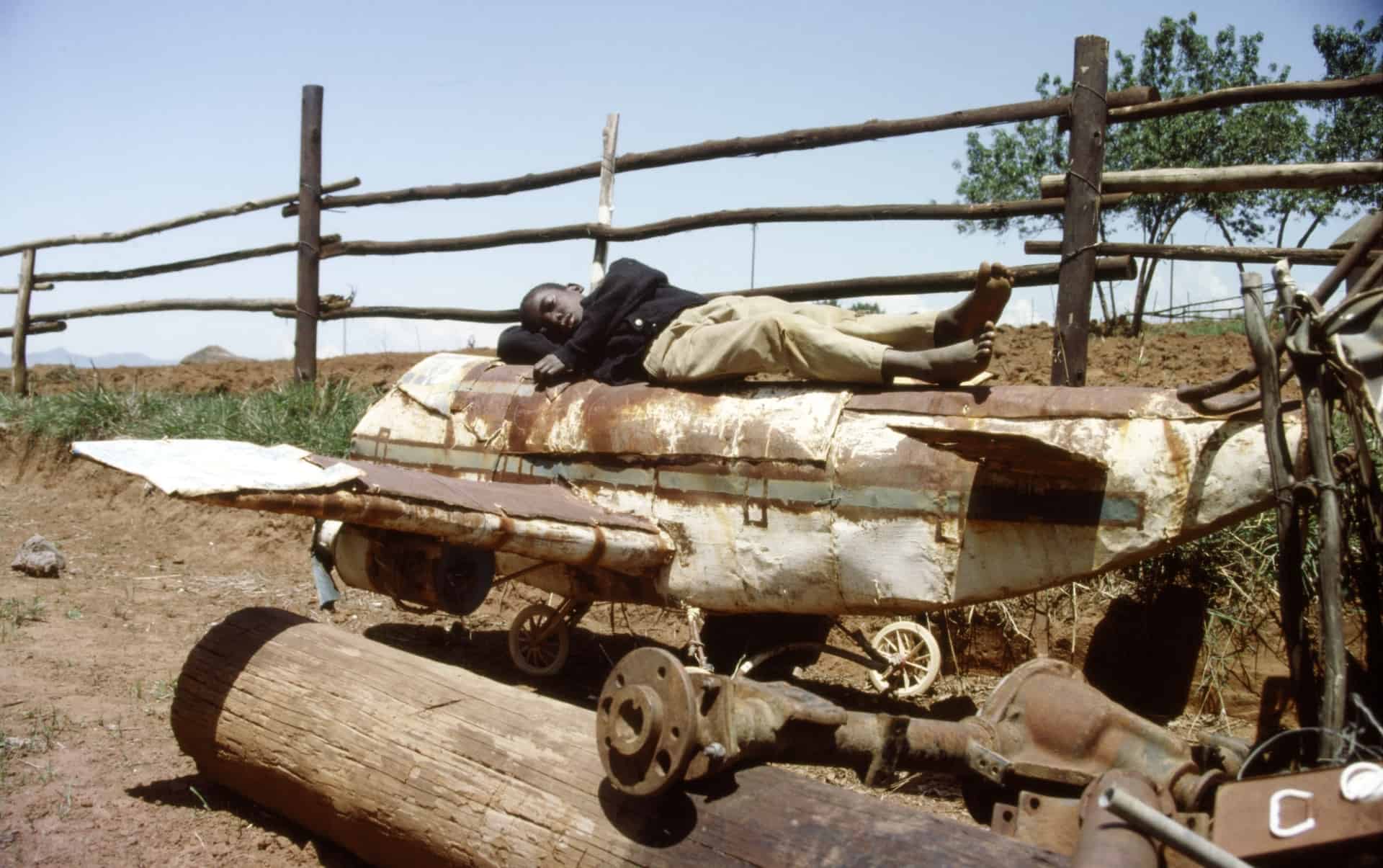
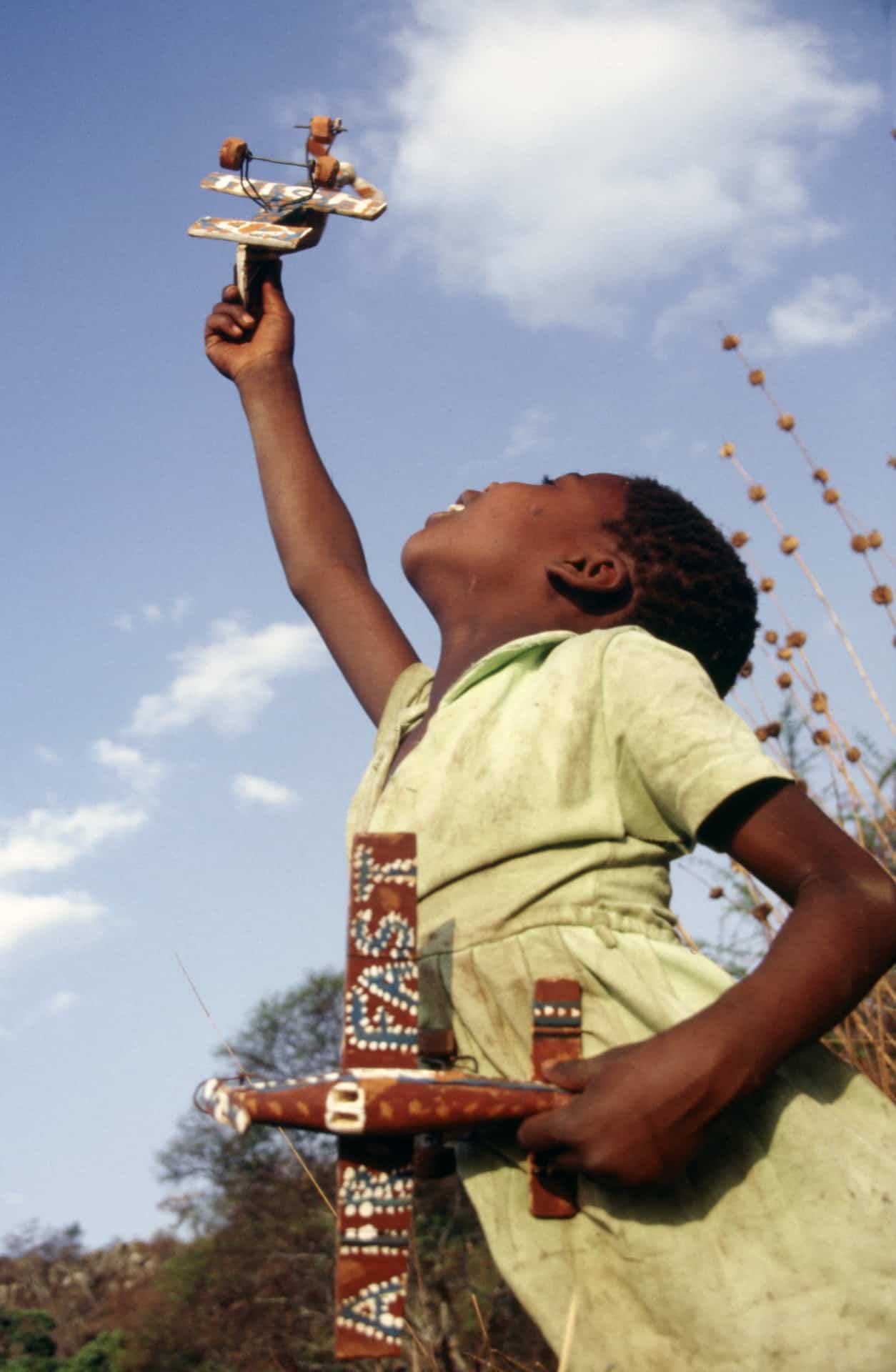
It was the children who really excelled in the fine art of creative incarnation; jumbles of wire, can lids and bottles had been magically transformed into lorries, cars and guitars, the playthings of children with no access to manufactured toys.
A fresh perspective pulsed through the exhibition – undeterred by previous function or preconceived ideas, humdrum materials were being transformed with wit, panache and elegance. Especially, it seemed, in southern Africa… I had to go.
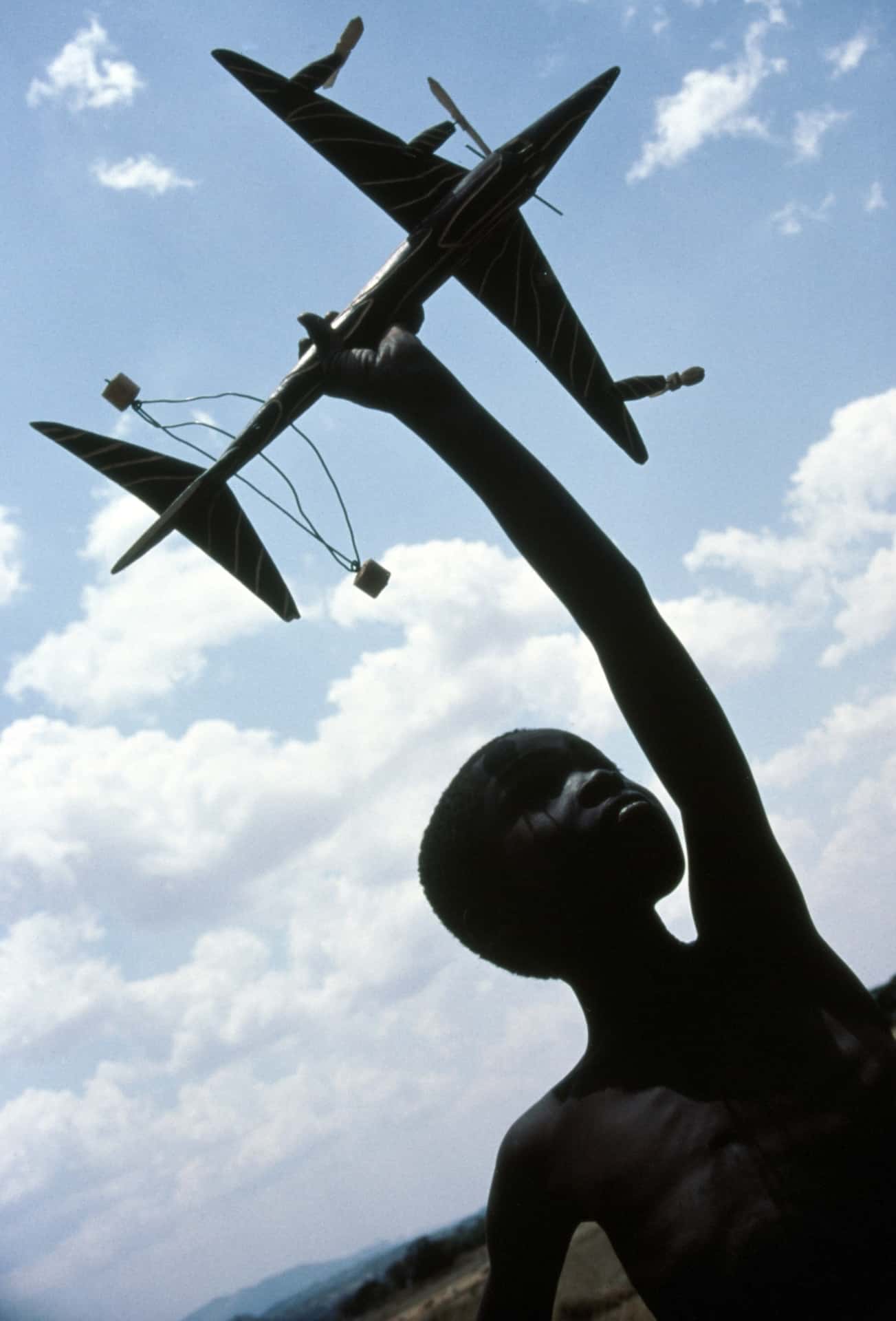
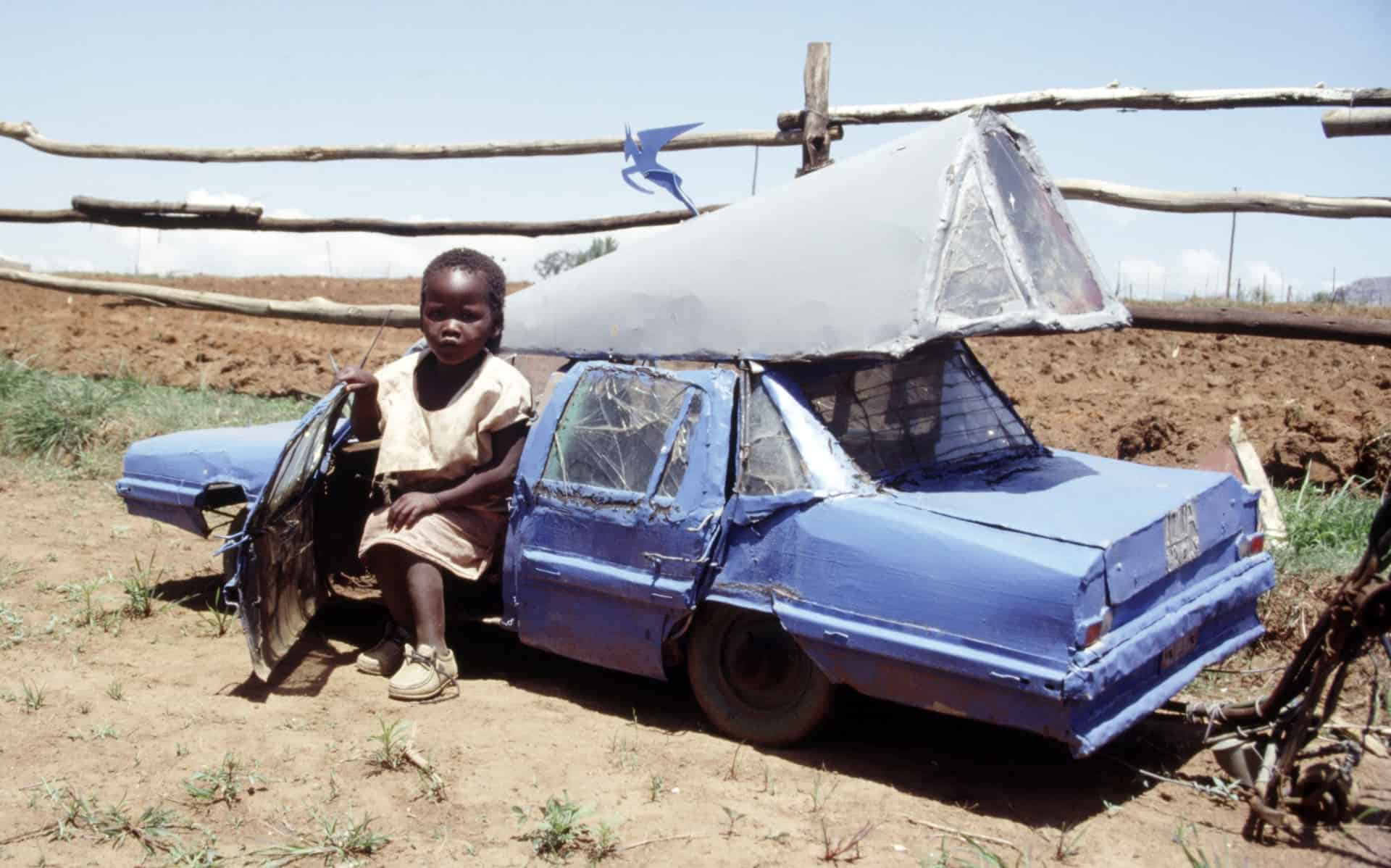
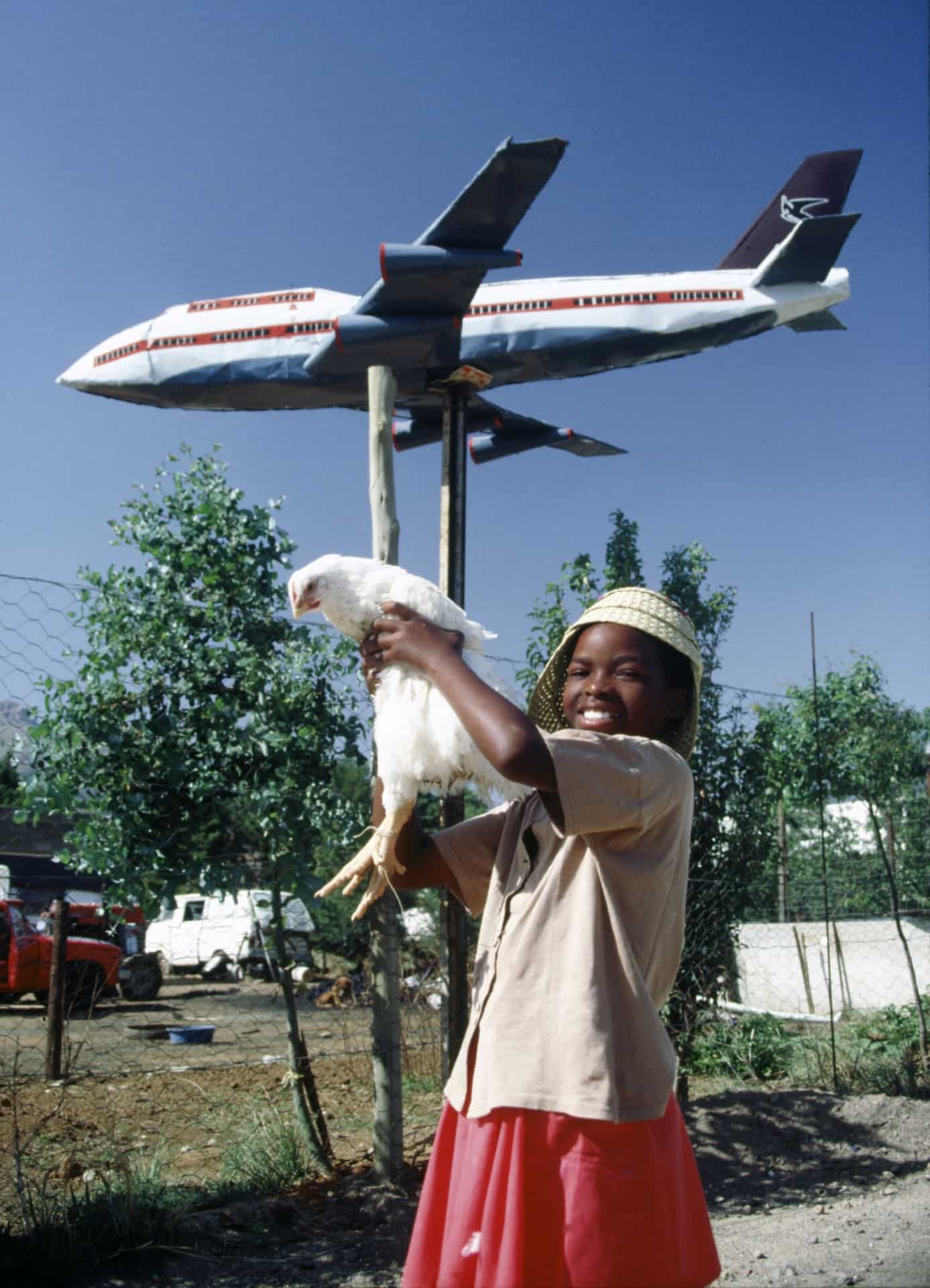
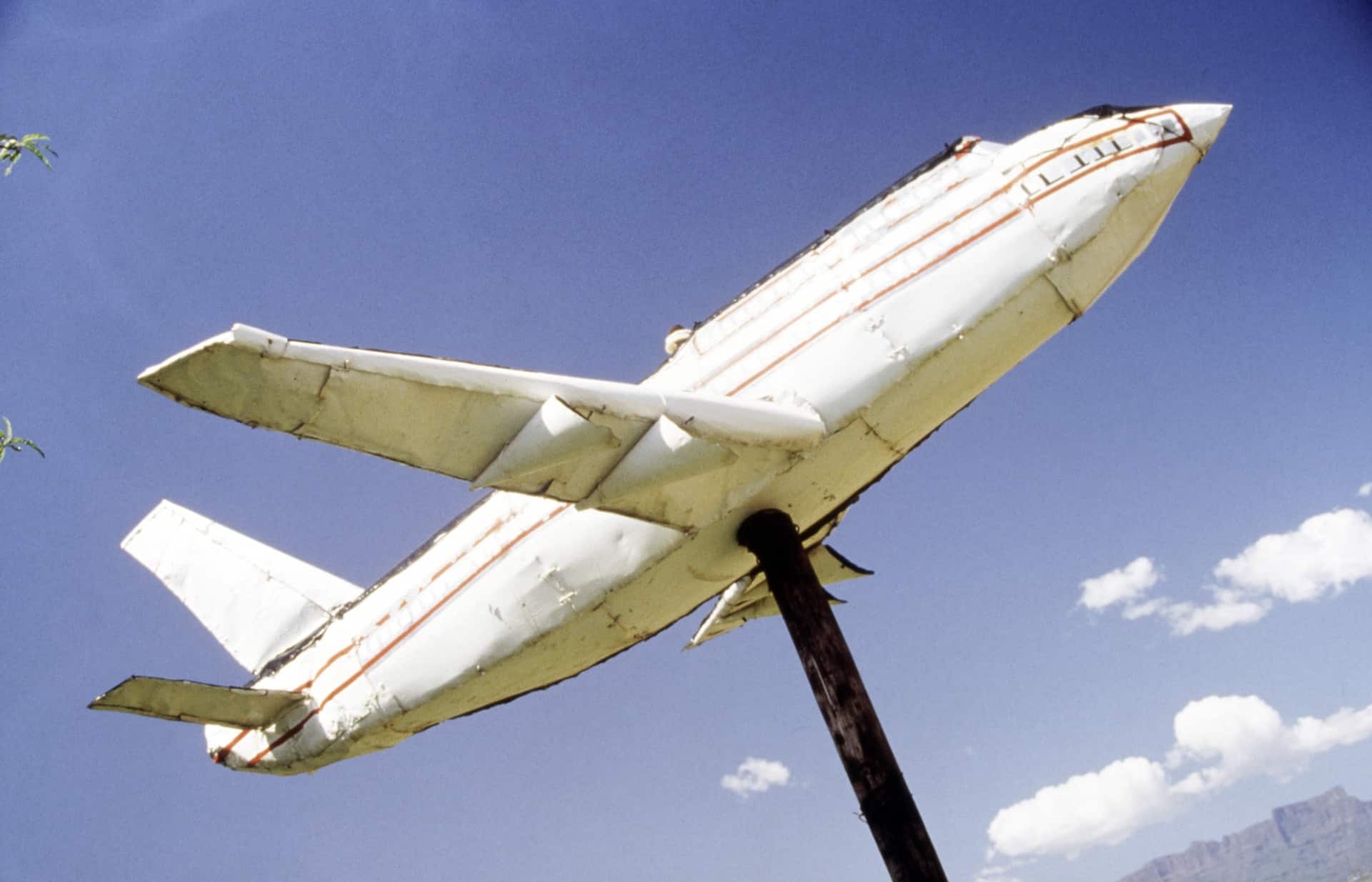
Winning the Commonwealth Fellowship for Sculpture in 1992 was my golden ticket. A generous grant enabled me to set up a sculpture studio in Harare, Zimbabwe, where I made my own work for six months. I also used the time to travel extensively whilst photographing creative recycling at its very best, mundane objects surprisingly repurposed into sculptures and toys. I criss-crossed Zimbabwe, Zambia and Namibia, returning with stunning documentary photographs which became an integral part of my exhibition at The Commonwealth Institute and Cassian de Vere Cole Fine Art.
In 1994, the Arts Council of Great Britain provided another grant which allowed me to travel back to Africa. I had sufficient funding to commission all the artists I had come across on my previous trip to make pieces for an exhibition in London. The resulting show African Planes opened at the 192 Gallery, Brixton, London, in 1996. The artists who participated were all from southern Africa, with diverse backgrounds, age range and artistic motivation. What united them was their use of found materials and the way their sculptures (cars, humans, musical instruments, aeroplanes) reflected and communicated the culture that produced them.
All artwork by Sibusiso Mbhele, Kwazulu-Natal